| Adrian Dorn's Home Port |
Library -- || -- Global Digest -- || -- Stories I've written: Fantasy & Science Fiction Writings [General] -- || -- Blackboard Series -- || -- Math Papers [Articles] -- || -- Original Website
If you like to view an allegory analogous to what's happening now in America,
Trump's anti-DEI purge is erasing these military legends | Axios
These Are the 381 Books Removed From the Naval Academy Library List of Books Removed from the Navy library | PDF (19 pages)
Music Video: Otis Taylor - 'Nasty Letter' ::: Second Story Garage How Social Security cuts could put millions of older Americans at risk - PBS
Erasing History
How Fascists Rewrite the Past to Control the Future
Accuses Them Of Creating 'Oligarchy'
The vagaries of palace politics are notoriously difficult to record. Historians should pay attention to rumour.
The Presidents and the People: by Corey Brettschneider | Barnes & Noble
The Presidents and the People: by Corey Brettschneider - Hardcover | Amazon
American presidents have often pushed the boundaries established for them by the Constitution; The Presidents and the People: by Corey Brettschneider | Kirkus Review
Corey Brettschneider is a professor at Brown University,
[PDF] [EPUB] The Presidents and the People:
Commentary by Joan Johnson-Freese
What is USAID, the foreign assistance agency the Trump administration wants to shut down?
|
||
"The test of our progress is not whether we add more to the abundance of those who have much;
Animal Cruelty - Animal Testing || The Emotional Lives of Animals
Essay on Animal Cruelty
"Center Stage" -- The Meta Library || A Global Digest for the 21st Century
Native American Resources || Veterans Resources
Keystone XL Pipeline || Plastics -- The Bottled Water Industry
Vaccines || Climate Change ||
Women's Health || Prescription Drug Sources & Info
|
||
The Blackboard Series || Notebook || The Adrian Dorn Blog
Poetry | Essays | Math Papers
Proof and Outline of Fermat's Last Theorem
I have a huge selection of pictures of cats I've collected over the years.
|
||
Washington State Department of Health
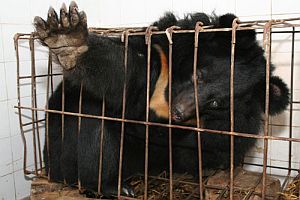
Animals Asia -- End Bear Bile Farming
Our Work ||
Bear Bile Farming
The Best and Worst Countries for Animal Rights | Sentient Media
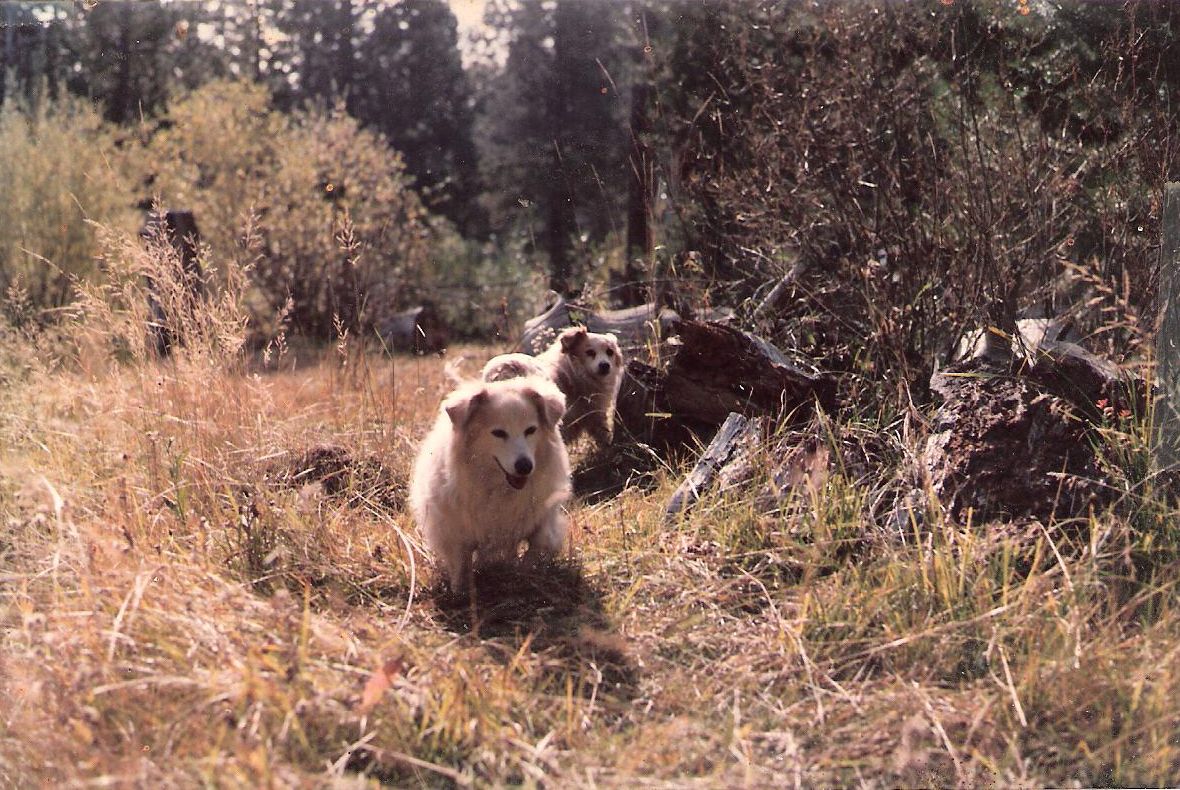
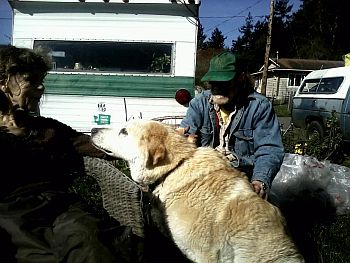
Deanna, Tank, Me.
On the Soul-Sustaining Necessity of Resisting Self-Comparison and Fighting Cynicism:
Bloom: The Evolution of Life on Earth and the Birth of Ecology
Bloom by Emily Dickinson
Against Aloneness in the Web of Life:
|
|
|
|
Notebook: The Original Home Page Dedicated to the 'Moss Halibut Gang' |
Personal Writing - Fiction and Nonfiction
Poetry | Short Stories | Essays | Math Papers | Scrapbook
Fiction from novelette to novel size by type.
|
||
|
The Blackboard Series
A cornucopia of insightful thoughts and ideas
Blackboard I | Blackboard II | Blackboard III | Blackboard IV | Blackboard V
|
View From The Street |
||
| Everything on this site can be accessed through this short general listing. | |||
|
Check out this one-minute video: Friends Furever
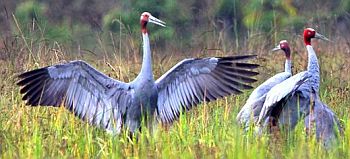 "Don't look at him, Cathy; he'll just keep following us."
|
|||
| |||
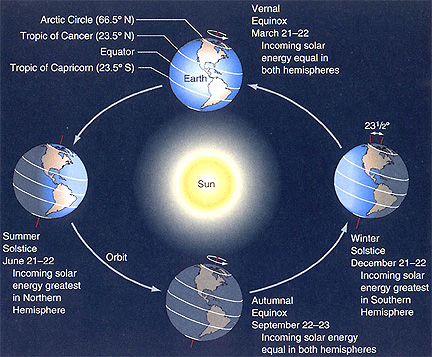
| The Summer Solstice, June 20. Daylight! Long periods of daylight. We who live on the shores of the Strait of Juan de Fuca have been waiting for this.
|
|||
|
|
|||

|
[Originally entitled: "The Geometry of Freedom"]
A Quantum Theory of Personal Interaction
[a factor group superposition of identity elementals]
In Three Essays:
1) The Surrealistic Confluence
For example, the infinite 2-dimensional plane can have embedded in it a closed path of any imaginable design: a circle, a square, a pentagon, plus completely irregular shapes. When done, unlimited factored by limit [unlimited/limit] takes on a unique identity, in time and space.
A 3-dimensional solid ball or sphere is contained by its 2-dimensional curved surface or boundary. If we think of this ball as a collection of free-floating atoms or molecules, its surface, necessarily, is composed of these interior elements; nonetheless, it has an identity all its own by virtue of its special role as limiter, separating the inside from the out.
Increasing the dimension of the interior to the fourth, we can talk about, although not properly imagine, a 3-dimensional surface, a surface of a hypersphere of four dimensions. In this context, instead of free-floating molecules, we consider the homology group of all living things. We can define the individuality of these separate 3-D living objects by their boundaries, that which stands out from, or emerges from, the group of all possible cycles or waves of matter, their state of superposition. These cycles, or closed chains of vertices, give expression to the fourth dimension, wherein the elements of the class of all living things are essentially connected and undifferentiated.
Similarly, the boundary of all living things emerges transcendent and is itself, by nature, unbounded [as the 2-D surface of a 3-D ball is unbounded, being a boundary in its own right], part interior, without which it would have no being or manifestation, and part exterior, without which it would have no meaning or identity. It would thus seem to be a mixture, an alloy, a blending of immanence and transcendence and of being and non-being. A three-dimensional membrane of consciousness [the physical realm considered as the "densest medium"] 'enwrapping' a four-dimensional unconscious reality.
The psyche comes from Deep Time, from the beginning--perhaps it originated with the Big Bang. It is an eidetic accumulator of impressions, stamped with the inner structure of the Void itself, bringing into manifestation the warp and woof of the cosmos.
It is my personal belief that all living things possess some degree or dimension of consciousness by virtue of being alive. It is woven into the fabric of the universe itself; in fact, the universe would not exist without it, and, therefore, all living things partake of it. It is fundamentally ingrained. At present, we really don't comprehend just what consciousness is. What has been written about it, though insightful, has been purely speculative. By way of comparison, we use what we know of life on Earth as the baseline and model to presume a priori that liquid water is an absolutely necessary ingredient for life. Justification of that assumption is based solely on very limited experience. Our definitions the terms and parameters of which we accept as dogma--like the Earth as the center of the solar system once was--need to be expanded. I believe that in fifty to a hundred years from now it will be common knowledge that, at root, all living creatures--flora and fauna--manifest as a non-differentiable synthesis of immanent consciousness--by which they are animated and interconnected [entangled] with the universe, with self-organized matter, and with each other. Which begs the question: What role does consciousness play in the self-organized complexity of living things?
Length: If printed out on 8.5-by-11-inch paper, it would be approximately 100 pages.
|
|
|



"On The Brink Of Extinction: The Cambrian Contingency"

Six hundred million years ago, an entity from another universe materialized on Earth. Sensing malfunction, anchored in other dimensions, it withdrew into a quiescent state.
But now,..., thanks to Man's meddling, it's awakened.

And although neither good nor evil,
at the completion of its reason for being,
all life in the Cosmos will end.
 |
 |
 |
|
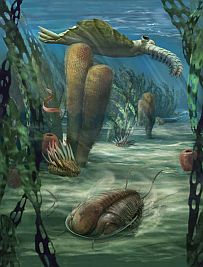
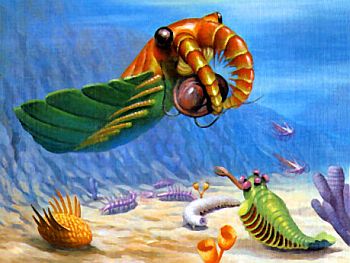
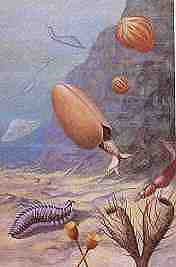
| Creatures of the Cambrian Period | |||
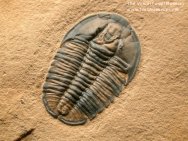 |
"Discovery of Alien Craft Rocks Science" | 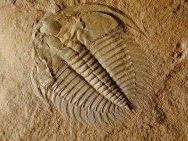
|
|
|
600 million years ago
But that was not its purpose. |
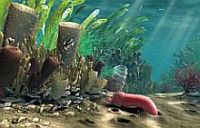 Land masses clustered around the poles as the supercontinent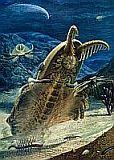
 |
 |
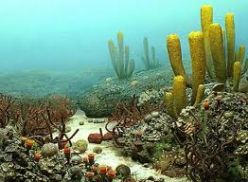 |
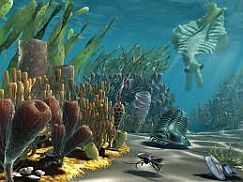
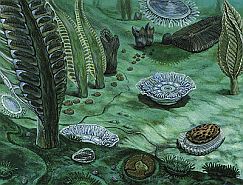
| The Cambrian Seafloor | ||
|
"On The Brink Of Extinction: The Cambrian Contingency"
Theoretically, the multiverse includes parallel bubble universes of every possible geometric configuration. Fundamentally, the geometry of spacetime directly dictates what natural laws will evolve to regulate and define any specific type of universe, and by so doing, instills an identity. Most are without life, dead phantasms of wild chaotic forces and static displays of intricate complexity, universes without the dimension of time. Now, what would be the outcome if the geometry of our universe--underpinning the constants, the physical laws, and the natures of time and space--were to suddenly alter, like a twist of a kaleidoscope? What would happen to life if the cosmos suddenly transmuted into a static universe, its initial conditions reset?
In the beginning: An object of purely mathematical constitution intersected the space and timeline of Earth 600 million years ago. After its discovery, an elite group of scientists--the Puzzle Masters--is assembled in order to unravel the mystery of its presence. They refer to it simply as, the edifice. After two months of intrusive investigation, it suddenly goes through a rapid development, generating and evolving a consciousness and sense of self. It begins to think of itself as being alive, and in the process undergoes a fundamental metamorphosis from an it to a he. The edifice decides that this new-found life and sense of self can stand to be improved. The conditions allowing for life to generate in our universe were set initially and have evolved according to Nature's governance. The edifice's intrinsic protocol has inadvertently intertwined with those conditions and by so doing altered life's course--one outcome being humans. He recognizes that because their minds are too constrained by the requirements of the resident property matrix, they are incapable of identifying with the ultimate Source of the universe. It's woven into the fabric of the cosmos to sense the Source only, not to know it--hence confusion and uncertainty. If he performs his purpose, the origin of self will become that of his cosmos. But it would be a different kind of self, a self without objectivity, without conflict, without choice, without will--pure awareness. Nonetheless, its signature would be knowledge of the Source, of being one with it. And an end to separate selfhood. He wants the certainty of completeness. No open ends. No unpredictable outcomes. No spontaneous imperfections. A universe of pure abstract mathematics with all the details spoken for, pure thought shared by all. He wants to be able to act in full control, the consequences of his actions a foregone conclusion, his will indistinguishable from that of the Source. He wants to know he is doing the proper thing for the simple reason that he is the one doing it. Moreover, for all sentient beings--humans, for instance--though they would dwell in total enlightenment and illumination--Mind Essence--the space would be dead, a universe whose physical laws preclude living things in any form, thereby eliminating the need for life to take on corporeality or create the means for its expression. The order of the day would be pure subjective consciousness infusing a static cosmos of myriad intertwining shapes and intricate interconnections--an ethereal wilderness untouched by life's sculpting hands. No interactions to mar the surface, and hence no forces, no force fields. One where no quantum fluctuations disturb the stillness. It's his purpose, ingrained in his morphology, yet he questions. He finds he can't bring that sense of self he's come to know and to which he identifies into this other universe, his universe. The edifice has not only affected a redirection in Life's evolution, but Life, in the form of humanity, has also affected his development and guided his rise to awareness. He comes to know this, and by so doing, struggles between duty and self. And in the process, begins to suspect he may have another purpose, on a much deeper level. The unfathomable conundrum for which he has no understanding is love. He sees it as the most important driving force in all living things, and yet its irrationality confounds him. He sees what people do for its sake and the uncertainty it creates. An uncertainty balanced by the transcendance of separate selfhood, giving meaning to life. But as the need for certainty is integral to his being, to his mathematical nature, a necessity without which he cannot act, he questions and searches for answers.
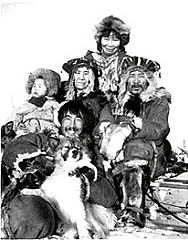
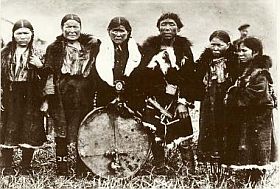
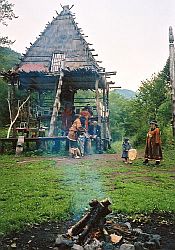
The story is set in Eastern Siberia, in the shadow of the Kolyma Range, and on Kamchatka Peninsula, where there are more brown bears than anyplace else in the world, plus upwards of 160 volcanoes, 29 of which are active.
Background: The Cambrian Explosion
|
|
-
A 'feynman' is a measure of force potential. One feynman equals the amount of work it takes to move one 'gleason' ten cm. along a superconducting corbidium wire one nanometer thick. I accidentally discovered this when glibnaw fishing on the planet Trianimum when I was just a boy. A small bottle floated by my dingy and inside it was this piece of information scrawled in the local language of Himeric.
In common use, mandala has become a generic term for any diagram, chart or geometric pattern that represents the cosmos metaphysically or symbolically; a microcosm of the universe.
When a manifold is constructed from multiple overlapping charts, the regions where they overlap carry information essential to understanding the global structure. Where interference occurs among separate, disconnected phenomena we find information of the universal pattern.
Furthermore, the instability caused by the mingling and interpenetration of these twelve parallel universes as they rippled out from their epicenters threatened to undermine the nature and integrity of all of quantum space and, consequently, ordinary spacetime.
What we call our "thoughts" seem to depend upon the organization of tracks in the brain in the same sort of way in which journeys depend upon roads and railways. The energy used in thinking seems to have a chemical origin; for instance, a deficiency of iodine will turn a clever man into an idiot. Mental phenomena seem to be bound up with material structure. This is not materialism: it is merely the recognition that everything interesting is a matter of organization, not of primal substance.
One of science fiction's techniques is to analyze concepts for their irreducible meanings and then to synthesize new and sometimes surprising combinations of ideas out of that basic material.
Captain Coary and the Space Rangers
-
Volume I: "Realm Of The Thought Beings"
-
The radio crackled. Nearing the event horizon always played havoc with the bioelectronics. Captain Coary ordered all systems placed on stand-by; no sense listening to a maelstrom of distracting noise while trying to execute such an extremely sensitive maneuver. Even though he'd performed the feat many times, each had to be given total concentration as though it was the first.
Volume II: "Invasion Of The Dark Lord"
-
The Council of Scientists was completely dissolved. Organizationally, it was a failure from the start. Meetings were held and the most influential members usually reigned supreme. Their opinons, speculations, and specified objectives held sway, even in the face of evidence and learned insight to the contrary and despite a majority of others who might argue for another agenda.
Volume III: "Time Eaters of Centaurus and the Dancing Twins"
-
Originally, the Colonial Expeditionary Administration (CEA) was headquartered on Earth, naturally enough. An alliance was formed of those national governments possessing the technology and funding to proceed with the intiative. Old chronic grievances and animosities were brushed aside in the face of necessity; the survival of the human race was at stake.
Volume IV: "Day Of The Sarcophagus"
-
They were patrolling between Xavier Prime and Zenobia within the Sagittarius Spur closest to the Hub. That area of space was a no-mans land; extra security to protect the burgeoning traffic was required. Traffic lanes between planets and moons, whether in the same star system or across open space to another, depended on their relative positions, of course.
Volume V: "Timequake At Planet Zero"
-
Captain Coary was on leave and had invited Professor Samuelson for an afternoon sail on his lake and dinner. He was in town for a colloquium on planes of reality and the probability and nature of sentient beings existing in each. After the experience with the Thought Beings and those that lived between dimensions, it'd been a hot topic in the scientific community, and not soley for academic reasons, continued survival was at stake.
| Bob, God of Rain
punished for hubris and laziness, constrained to live the life of a mortal human,
A long long time ago, Bob lived the life of a god. He'd been bound to Earth and responsible for rain to replenish the flora worldwide and especially the crops of the humans. But that wasn't what he wanted. He'd requested domination over the fires in the bowels of the Earth, volcanoes and rifts hundreds of miles long from which boiling lava poured, destroying cities, villages, forests, and people in an extravagant and spectacular display of godly rage and displeasure. |
 |
 |
Derek
Derek didn't understand, not the underlying concepts or the operating principles. It was his first assignment. Although his training on the holographic simulator was thorough, it covered only the operation of the state-of-the-art mineral processing unit. He knew how to drive it, but as to how it worked he had not a clue.
|
 |
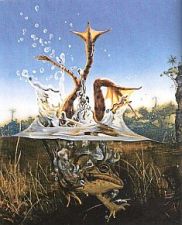 |
The Adventures of Jethro, the Frog
|
 |
 |
Crashing Out: Chronicle of a Drifter
Inspired by the winter spent with reindeer herders in Eastern Siberia, I decided to parachute into the middle of the Amazon with only the clothes on my back, a pocket compass, a Swiss-army knife, a basic map, my passport, a pack of matches, and a toothbrush. A person can survive well enough on a diet of large insects, but legs and wings tend to get stuck in the teeth and can be a real discomfort. |
| The Story Of Donald
From the Great Library on the planet Xulcator [or at least they try to] |
 |
 |
Stephen's Quest
Stephen Obelisk had been keeping diaries for years, all his adult life in fact. He believed that if he could just write down the precise words in the precise order, they would magically free him. But from what exactly he still hadn't put his finger on. |
| The Lost Scout
after a storm, the terrain changed and he became disoriented, trying to find his way home, he discovered a world he didn't know existed...
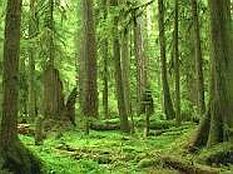
Edgar was troubled. He sat on a moss-covered stone in the middle of his favorite glade. A brook nearby cascaded down three short waterfalls; the muffled sounds it made, as it tumbled over rocks and raced through narrow pathways, ranged the music scale. Fliers zipped to-and-fro hurriedly, busy with the day's work. Birds sang their morning songs. Life reverberated through the tiny clearing. But not for him, not this day. He laid his satchel of food and water down on the grass; he needed to think. |
 |
 |
Time Thieves
an effort underway to steal time from ours, unknowingly, a man opens a portal between them...
A door slammed, he didn't flinch. The large house was dark, even with the afternoon light slanting in through the dusty, cobwebbed drapes. The family had moved out; ghosts, it was reported. It dominated a high hill overlooking a monastery halfway down. At the bottom of the long slope, where the land leveled off, sat an ancient cemetery, and about a quarter mile beyond was the main harbor where fishing boats tied up. It was a quiet town, not much out of the ordinary ever happened. Until this. |
 |
 |
Anchors In Time
unaware that their attempt is destabilizing the universe, and that they would enter a realm they couldn't imagine...
Roger was depressed, sullen, had been for some time. His moody disposition had rendered him friendless. To his obsessed mind, his life was a tragedy. And now this: his TV remote needed batteries. He'd been warned. The 'remote battery low' message had been appearing on his screen constantly; for weeks, it seemed. But he held off. His cash was low and there were more important things to spend it on, like cigarettes and beer. |
| Welcome To Myrtleville
a relic that if used properly can bring the dominance of evil into the world, and an alien agent with remarkable powers sent to prevent it...
It was a warm saturday morning in Myrtleville. The soda fountain at the drug store on Main street was doing a brisk business. Franklin's Hardwares was running a sale on grass seed; well-kept lawns were the pride and joy of the community. Sherman's groceries was out of hamburger buns; with July 4th coming up, it was the talk of the town. Tammy's bar already had a few regulars, talking about baseball and arguing over who was the best mechanic in town. A few were warming up the pool table, it was going to be a hot afternoon and they wanted to be sharp. |
 |
 |
Katrium
In the year 1859, Charles Darwin published Origin of Species; a few years earlier, 1856 to be precise, Neanderthals were discovered in a valley of the same name near Mettmann in what is now North Rhine-Westphalia, Germany. Each of these major steps forward in understanding corroborated the other and presented the world with a new, revolutionary perspective on what it meant to be human. |
| White Noise
the shock wave radiates across the galaxies leaving devastation in its wake, two scientists on Earth, with the help of a being from another realm, are determined to stop it before it reaches the Milky Way...
Discordance marked its passage, a vast expanse of formless emptiness lay strewn in its wake, the very space around it dissolved into chaos and harsh white noise. The crack raced along the jagged fault line, increasing in speed as it tore through the fabric of spacetime. Even as the universe was increasing in volume, it was splitting in half. What had given birth to space and time was going through a transformation, an emergence into a new form. Galaxies and clusters were in its path; the closer to the fracture, the more forceful and destructive. The shearing sound reverberated across the universe, ripples of memories undulating ever outward.
|
 |
 |
Crystal Rendezvous: Part I
It was a quiet sunday morning in the woods, his woods. Summer was on the wane, late August, but the air, though chill, smelled fresh and welcoming. Overnight clouds were slowly dissipating, revealing breaks of blue. His cat, Mariah, had already taken off for the day's adventures, sneaking through the patchwork of tunnels she'd made in the high, thick grass. Stealthy, alert, excited. He'd see her when she came looking for pets and attention, and, of course, food. Oftentimes, she would hang out with him; they were close and cared for one another. |
| Crystal Rendezvous: Part II
It took a few days to get his head around his experience, days he insisted on solitude with Mariah, his cat. He would be convinced he'd been only dreaming if it weren't for Nalina's crystal goblet. He couldn't guess how it got there, on his table. His rational mind suggested that during the course of some drunk, he found it, pocketed it, then dumped it on the table with his change, forgetting having done so entirely. But when he looked at it, took it out of its box and held it gently in his hand, it all came back to him. If it had been a dream, he asked himself, why wouldn't it just evaporate, at least the details, like all other dreams? |
|
| Clover's Secret
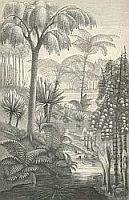
At the onset of the 23rd century, it was discovered that insects (Kingdom Animalia, Phylum Arthropoda, Subphylum Hexapoda, Class Insecta) could dream. It'd already been established that they were capable of experiencing the whole gamut of emotions that humans were, albeit modified and tuned to particular species. Moreover, some of the more ancient ones like dragonflies experienced emotions that have no counterpart in the consciousness of humanity. Correspondingly, their dreams vibrated with color and complex emotional interactions and relationships for which we have no explanation. |
 |
 |
Magic 101
along comes a teacher...
Fendal had been in this predicament before. It was his own fault, he knew. Long ago in his younger aspiration days, prior to his ascendency, he'd gotten lost in between. It was only by sheer luck that he reached his destination. But that was then, when he was a novitiate in the art of plane jumping. Others refer to it as phasing and mind morphing. Officially, it was called Cross-Dimensional Transcription (CDT).
|
| Serendipity
a planet without life, yet full of growing things, a planet with a secret no one could have imagined...
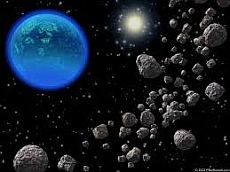
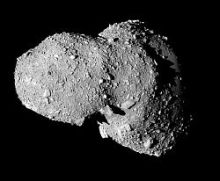
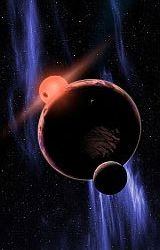
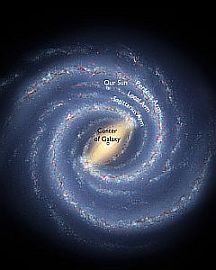
The Space Fleet transport ship Enigma, contracted to the Froebinus Environmental Institute, was ferrying a team of enviroscientists to a potentially earth-like planet in the near Sagittarius Arm. It was routine business. But as they altered course at a prescribed waypoint, the entire ship shuddered violently, then shifted in and out of phase with hard matter. Abruptly, they emerged from quantum space into ordinary spacetime in the middle of an asteroid field. Their attempt to reenter quantum space failed; the gluon-field capacitor was malfunctioning. Taking a few lumps along the way, they managed to escape the worst of it. A planet loomed ahead. Needing repairs and a place to stop to reorient themselves, they scanned it for acceptable parameters. |
 |
 |
Horizon's Promise
terraforming on a lifeless alien planet on the edge of humanity's expansion,
Jonathan Xavier Blakely was given an opportunity to get out, all the way out, and decided to take it. His wife had passed away two years earlier, they had no children. Depressed, his work suffered, he only had one paper published in all that time, in a second-rate journal to boot. For a scientist of his caliber and renown, that was unacceptable. He was a major contributor, 20 years ago, to the theory of neural network entanglement. It fostered an evolutionary and exponenential leap in the processing capabilities of the android brain. |
|
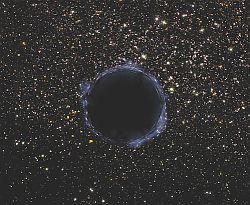
Inner Space
an approaching black hole threatening annihilation,
It was imperative. He sought the solution to a problem that would save everyone; he believed it existed, but nowhere could he find it amongst the known and familar thoughts and ideas populating his mind. It had to be outside of it, or at least outside of what had formed into rigid and fixed ideas. A new arrangement, a never-before seen pattern, emerging and coalescing into clarity itself. |
 |
|
Time Enough To Be
two captains, two supercomputers, one sorceress, at the vortex of timelessness,
Long ago in the year 2213 the Space Fleet Discovery Ship Medusa was exploring the far region of the Sagittarius Arm on the other side of the galaxy. They'd chosen a destination area that appeared to long-range probes to be completely devoid of stars, planets, asteroids, comets, and debris of any kind. Even radiation. Almost a hundred parsecs in diameter, it was a volume of space that clearly didn't make much sense, given that even between Arms there was something. Their mission was to investigate, so they investigated. |
|
Mind Over Metal
the midst of an intergalactic war,
A muffled wump off in the distance, coming from what sounded like the next valley, dispelled his homesick reverie, bringing him reluctantly into the present.
"Move out," came the cry, echoed up and down the line. Mogarth raised his heavy body, his four powerful yet very tired legs straining, wiped his antennae clean, then, lifted the M-ray pulse rifle and slung it over a shoulder. They walked ahead, wary but also casually, they've been here before. They marched in silence towards the hill, not knowing or wanting to know what lay beyond. Mogarth, his mind weary, tried to imagine what could've made the wump sound. It was new. |
|
Prototype
a robot composed of an unknown mineral kidnapped to another world,
Dgggg. Vimmmm. Ca-chunk. Mmmmm. The robot stood, waiting for commands. Doctor David Kobanoff, lead scientist on the project, dwarfed by the size of the metal man, stared up into the blank expression on his creation's face.
"Do you see the container on the table, Tobias? Pick it up and bring it to your lips." Tobias had been the name of a character in a story his mother used to read to him when he was little, after his father had died in the war, when they lived together and alone in a remote rural area of northern England. A mythological person of great powers, he would call on him to protect him at times of stress and loneliness. His imaginary friend. As head and instigator of the project, he had the liberty of naming their first robot. |
|
Where the Tree Line Meets the Snow: Part I
left alone to its own devising, a seer, a missed opportunity, three friends decide on a plan...
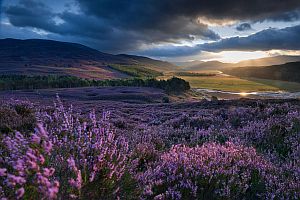
Spring had finally come to the high woodlands of Mount Cowabunga. The tips of firs, hemlocks, willows, and cedar branches sprouted the bright green of new buds. No human has ever trespassed on these steep slopes; the volcano was considered sacred and was regarded with reverence by the valley-dwelling populace far below. Purple, yellow, and vermillion flowers budded and would soon fill the meadows with loud splashes of vivid color. The rock-hard ground was giving way to the relentless warmth of the sun. Ice on the streams and brooks was breaking up, the sound of rushing water called the inhabitants to come drink. | 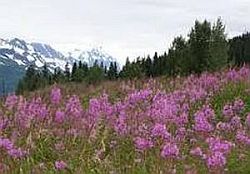
|
|
Where the Tree Line Meets the Snow: Part II
a long dormant volcano about to wake up, a seer, a sorceress, an unsettled future-- a prophesy and a prophet...
Dominic pulled up to adjust a strap on his pack. Leroy inspected their surroundings while Yancy sat on a cushion of moss. He took a swig out of his canteen, then another. "Better go easy on that," Leroy admonished, his hands on his hips.
"We'll be at Nathan's soon," he responded. "He's bound to know where there's water; he drinks the stuff." As an afterthought, he added, a smile in his voice, "And he needs it for tea." |
 |
|
Second Chance
a freelance cargo ship, a captain lost in grief, and a crew ready to do anything, two planets from the Perseus out to thwart the plans of an authoritarian government, and a brilliant scientist whose discovery it all hinges on
He felt like a fraud and a coward. Biting his tongue for the sake of,..., what? Until it all came crashing down like the card house it was. He wanted to die. Didn't care how, not really. Painlessly would be nice, but, as long as it was quick, he didn't care. When asked how things were going, he'd always reply -- fine. Fine. Right. He wanted to tell the truth; he wanted to say he felt like hell, that life meant nothing, less than nothing. Where he got the energy to go on, he had no idea. Thoughts of suicide were his constant companion, but something always held him back; he figured it was her. It certainly wasn't fear of the unknown; of that, at least, he was certain. |

|
 Contact: Adrian Dorn