|

The Astronomer (1668)
Johannes Vermeer
Astronomy/Astrophysics
NASA
|
NASA Human Space Flight
THE HUBBLE
Astronaut Bio: Sally K.Ride
Sally Ride Science
U.S. Mint Announces Quarters Honoring Sally Ride, Maya Angelou
Sally Ride | National Women's History Museum
Sally Ride by Lynn Sherr
Sally Ride American Astronaut | Encyclopedia Britannica
Michael Collins obituary | April 29, 2021 - The Guardian
Astronaut and pilot of the command module Columbia during 1969’s Apollo 11 mission.
Apollo 11 Astronaut Michael Collins Dies | NPR
Michael Collins, Apollo 11 astronaut, dies at 90 | The Washington Post
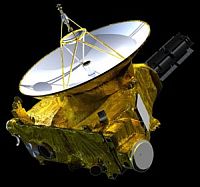
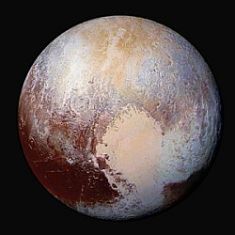
New Horizons | Mars Exploration Rover Mission | Voyager 1&2 | Cassini- Huygens | Exoplanets
Star Clusters/Galaxies | Cosmic Web | Gravitational Waves | Cosmic Sound Waves | Solar System || Earth
The gas giant rises at 2 a.m. on July 1 and just after local midnight on July 31. This places it some 35° high in the east as dawn begins. Jupiter moves 4° east during the month, ending July 12.5° southeast of Hamal, the brightest star in Aries.

Heliosheath | PDF File (12 pages) | Astronomical Review
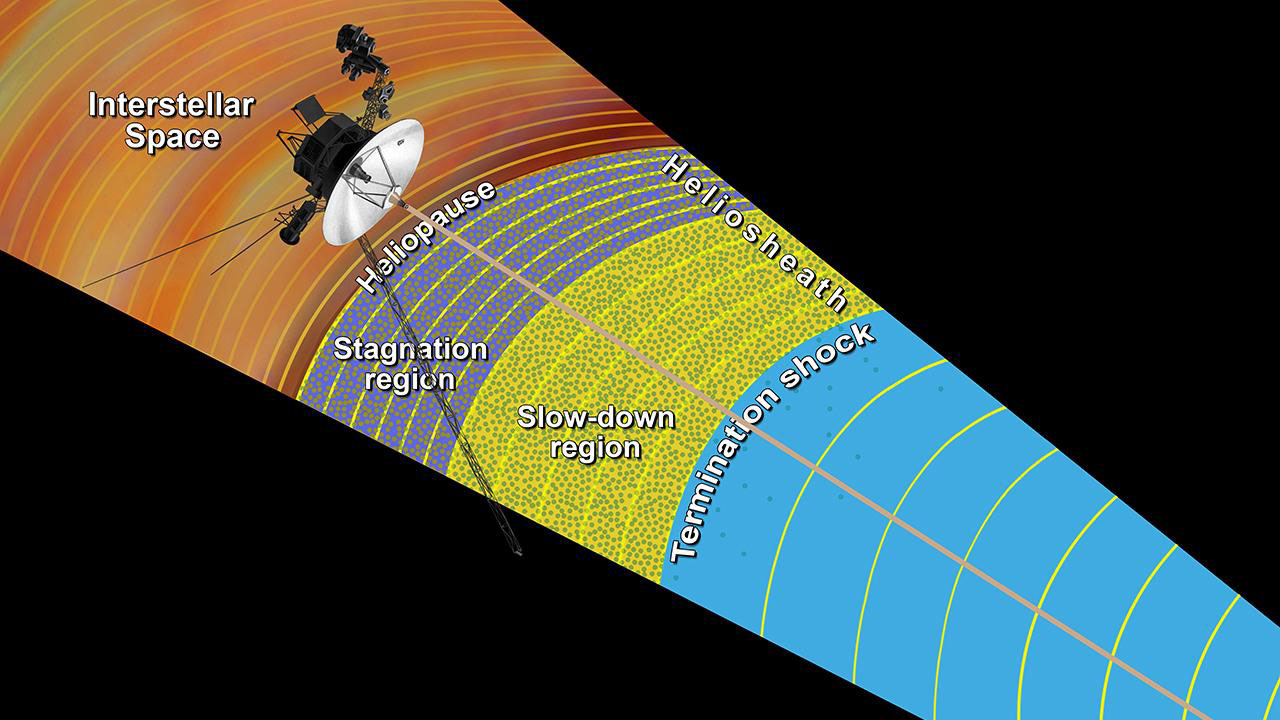
Click image for larger version.
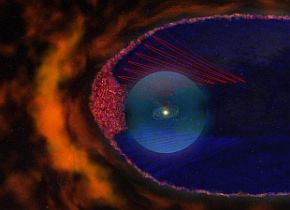
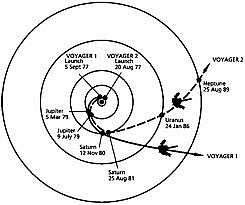
| After another 12 hours the sunlight reaches the heliopause, where the solar wind — a torrent of charged particles flowing away from the Sun at about a million miles per hour (400 kilometers per second) — smooshes up against the interstellar medium. Beyond this boundary is interstellar space, where the Sun’s magnetic field holds no sway. |
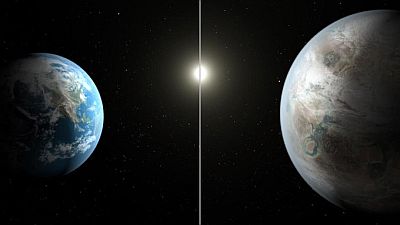
Some time ago, after watching a documentary on Astronomy, I sent an email to the American Astronomical Society (AAS). My reason: In every documentary on Astronomy I've watched and articles in magazines and online I've read, reputable astronomers and science writers disagree on the number of stars in our galaxy--the Milky Way. I've heard eveything from 100 billion to 500 billion. So, in anguish and frustration and determination I wrote the Society. Finally, I received a response, and here it is.
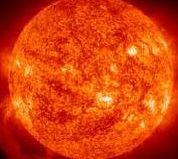
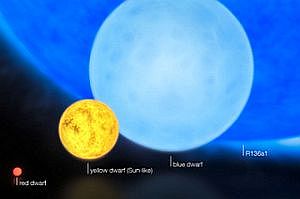
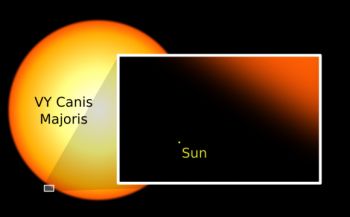
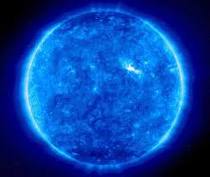
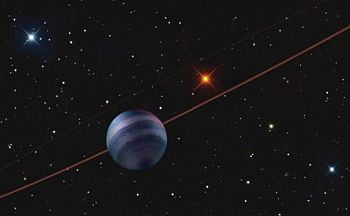
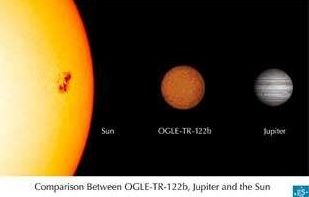
[According to Wikipedia, OGLE-TR-122b was considered the smallest up to 2013. The title was taken over by JO523 after then.]
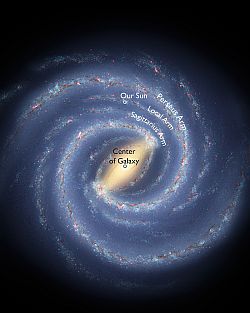
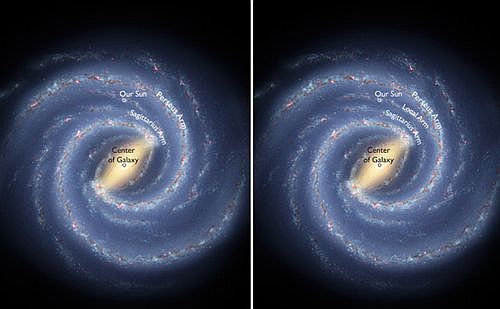
New understanding of Orion Arm.
Old version on left branching from Sagittarius Arm.
New version on right branching from Perseus.


 |
 |

|
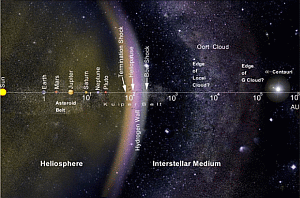
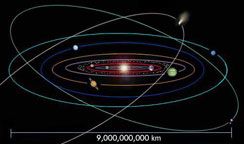
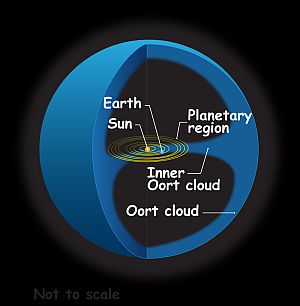
Beyond the Kuiper Belt at 50 AUs, we enter an area where the sun's gravitational and magnetic influence falls precipitously as it confronts the interstellar medium--gas, in all its forms, dust, and cosmic rays--producing a turbulent bow wake as we cruise through space, circumnavigating the galaxy. If we consider the extent of the solar system to end on the outskirts of the Belt, then the diameter of the sun's reach is about one trillion miles. However, we need to travel another 950 AUs through this vast emptiness in order to enter the realm of the inner disk of the theoretical Oort Cloud. Estimated to begin at about 1,000 AUs, it appears as a disk or torus at first, then gradually curves to a sphere of comets, tiny asteroids, and other space flotsam and jetsam. Now, 1,000 AUs is 93 billion miles: 93,000,000,000. But this is only the inner boundary of the Oort. Where it begins to curve, wraping the solar system in a cocoon, is 5,000 AUs or 465 billion miles. Purportedly, it extends to about 100,000 AUs. [These numbers vary in the astronomy community. I've also read that the average distance to the Oort is 50,000 AUs or close to one light year, without a lower or upper bound estimate, but, that amounts to the same thing.] Rounding off the AU for convenience sake to 100 million, the outer surface or boundary of the Oort is 10 trillion miles from where I'm sitting, give or take an AU. That's trillion. [It's traditional to go with 'the average distance from Earth to sun' for the Astronomical Unit. Very romantic. A sentimental affectation, like holding on to inches, feet, and yards in light of the metric system. However, if a constant like '100 million' was chosen instead, everything would still make sense--it's just a gauge--and would make the world simpler for calculations.]
equals 10,000,000,000,000 I find the size of our solar system impossible to grasp. The very idea of a trillion miles is incomprehensible to me. To try to wrap my head around not only its meaning but also its significance for space travel leaves me numb. If we were a space-going people, used to voyaging from star system to star system, a trillion might simply be a basic unit of measure. Although, we'd probably no longer use the word trillion. Jargon might just call it a click. How many clicks to the next star? And to imagine ten of them? To get outside the solar system from planet Earth, all the way past the K. Belt and the outer boundary of the Great Oort, you have to travel one trillion miles in a direction away from the sun, and after that, nine trillion more. That's crazy. [Incidentally, that makes the diameter of the solar system 20 trillion miles or 3.3 light years. The Oort Cloud per se, as a physical reality, a whole of many trillions of parts, has never been seen. Purely theoretical, it's used to explain where comets come from.]
|
Laboratories
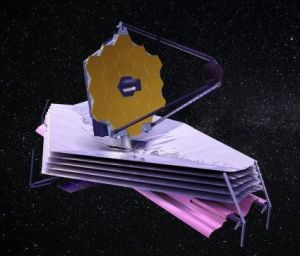
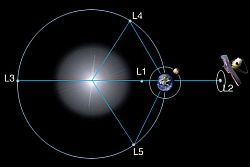
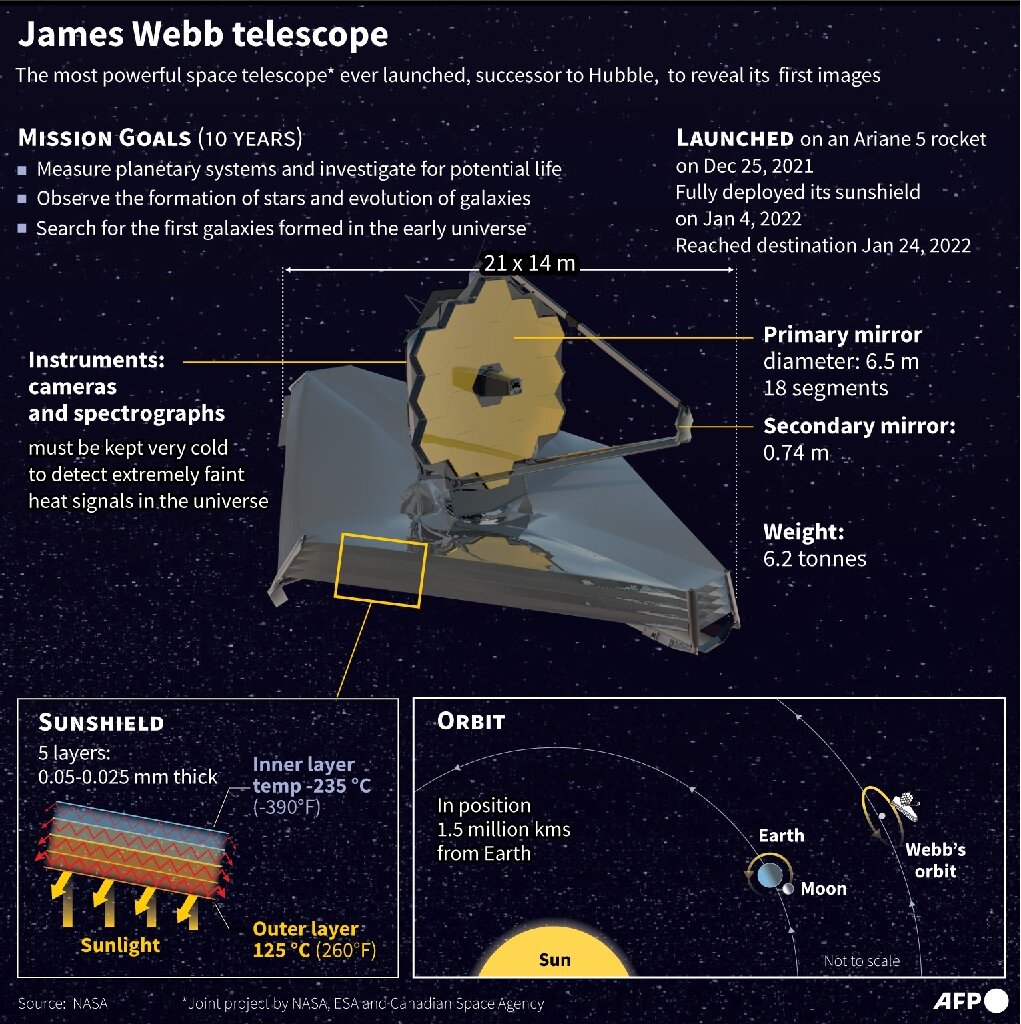
Since it will always be at the same location relative to Earth-in the midnight sky about 1.5 million km away
- we can have continuous communications with it as the Earth rotates through the Deep Space Network (DSN),
using three large antennas on the ground located in Australia, Spain and California.
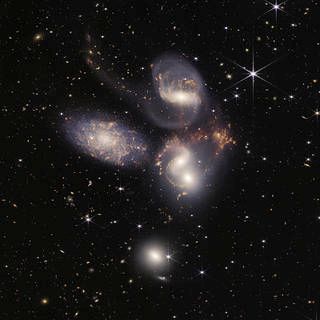
The new image of galaxy group "Stephan's Quintet" from NASA's James Webb Space Telescope shows in rare detail how interacting galaxies trigger star formation in each other and how gas in galaxies is being disturbed. The image also shows outflows driven by a black hole in Stephan’s Quintet in a level of detail never seen before.
 ||
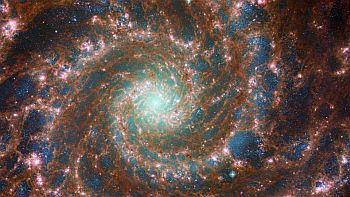
|| 
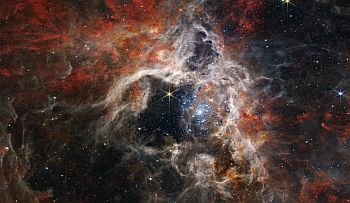
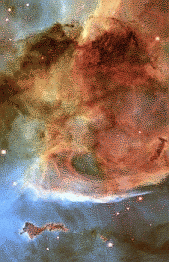
Tarantula Nebula
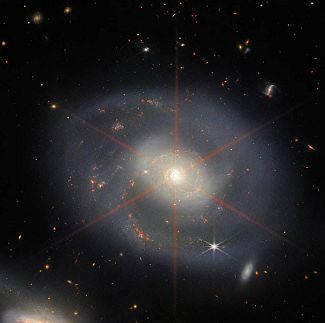
Starry Wreath in Pegasus
This image is dominated by NGC 7469, a luminous, face-on spiral galaxy
approximately 90 000 light-years in diameter that lies roughly 220 million
light-years from Earth in the constellation Pegasus.
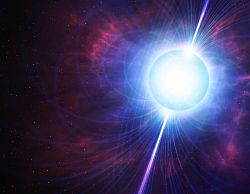
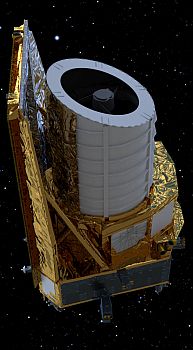
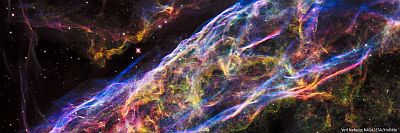
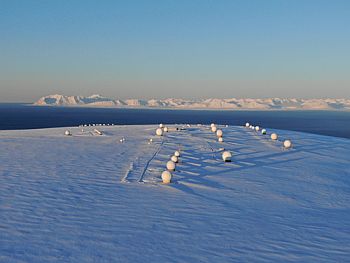
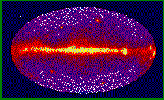
Performing searches on any of the following will most likely turn up some interesting sites that may surprise and intrigue. It's also a way to discover the great unknown.
Space Agencies
Astronomy/Astrophysics
|
|
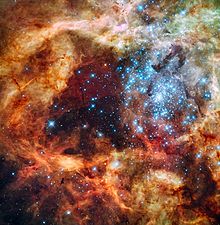
|
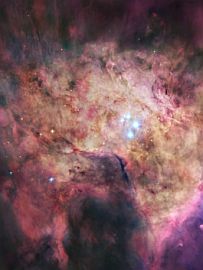
|
NEWS: As of September 12, 2023:
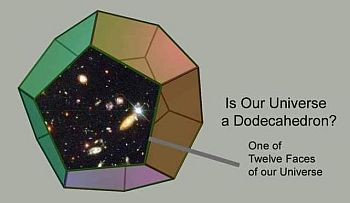
"In a nutshell, the universe according to WMAP is 13.7 billion years old, plus or minus one percent. It is geometrically "flat," in accordance with the simplest solutions of Einstein's equations, which equate gravity with the bending of spacetime. By weight it is 4 percent atoms, 23 percent dark matter — presumably, as-yet-undiscovered elementary particles left over from the Big Bang — and 73 percent "dark energy."" -- The New York Times
| "The Cosmic Background Explorer (COBE) was a mission to measure the cosmic background radiation. This electromagnetic radiation is presumed to result from the big bang." The infrared- and microwave-detecting COBE measures distant temperatures. |
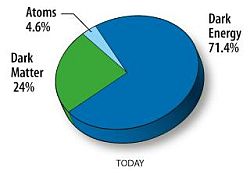
| The Nobel Prize in Physics 1978 was divided, one half awarded to Pyotr Leonidovich Kapitsa "for his basic inventions and discoveries in the area of low-temperature physics", the other half jointly to Arno Allan Penzias and Robert Woodrow Wilson "for their discovery of cosmic microwave background radiation" |
| On May 20, 1964, American radio astronomers Robert Wilson and Arno Penzias discovered the cosmic microwave background radiation (CMB), the ancient light that began saturating the universe 380,000 years after its creation. And they did so pretty much by accident. |
| The Nobel Prize in Physics 2006 was awarded jointly to John C. Mather and George F. Smoot "for their discovery of the blackbody form and anisotropy of the cosmic microwave background radiation." |
Newsgroups
Your News Server must list these newsgroups in order to access them.

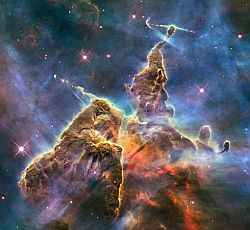
 Hubble Space Telescope Images